Field guide 01
Where this dollar goes
You are 19, heading into sophomore year, and just opened Robinhood. You do not need a career or a big paycheck to start. You need a few rules so the little money you have does useful work.
Education, not advice. Markets can drop. Credit-card interest is not a market. It is a bill.
What “starting” looks like
Most months the leftover will be small. That is normal. Ten or twenty-five dollars that you will not need for rent, food, books, or next semester is enough to practice the habit. Waiting until you “have real money” is how people start at 30 with the same empty account.
You do not need five banks, a 401(k), or a FIRE spreadsheet. You need: one or two cards you pay in full, one or two places cash lives, a small pile you can touch without selling stocks, and only then an investment.
One or two cards. Paid in full.
A credit card is a bill that shows up later, not free money. One card is enough. Two is the ceiling.
- Do
- Buy things you were going to buy anyway. Pay the entire statement before the due date, every month.
- Don’t
- Carry a balance. The minimum payment is a trap. Leftover debt is charged interest, often around 20% or more. No index fund reliably beats that.
Why bother: on-time full payments build a credit history. Landlords, car loans, and later apartments look at that file. Interest is the reason you never “just float it.” If you cannot pay the card in full this month, stop using it and treat the balance like the expensive debt it is.
One or two bank accounts is enough
Keep the checking account you already have if parents, refunds, or a campus job land there. Add Robinhood if you want spend and invest in one app. That is a complete setup. Do not open a new account for every goal.
- Checking
- Rent, food, the card payment. Money that leaves this month.
- Savings / cash
- A pile you can reach this week. Tuition surprises, a plane ticket home, a broken laptop.
- Brokerage
- The Robinhood investing account. After-tax. You can sell anytime. Gains may be taxed. This is not the emergency pile.
- IRA
- Only if you have earned income (a paycheck). Gifts and allowance do not count. Skip this until you have a job.
What Robinhood is good for
It is a brokerage first. It can also hold cash: a spending / debit side for everyday money, and uninvested cash that can earn interest through a bank sweep. Rate is in the app and it changes. Stocks and funds are not a bank deposit. They can lose value. Cash in the spending or sweep path is generally eligible for FDIC coverage at partner banks, not because Robinhood itself is a vault.
Nice extras: one login, easy transfers, you can buy a fund with a small amount. Gold, extra APY, and credit-card perks usually want a paid plan or direct deposit. You do not need those to start. A normal campus checking account plus Robinhood for investing is also fine.
Where the leftover goes
Pay yourself the boring bills
Card in full. Rent. Phone. Food. If that uses everything, you are done this month. That is a successful month.
Grow a small cash pile
Start with a few hundred dollars if that is what you can do. Aim toward a month of your real expenses, then more when income grows. Keep it in savings or Robinhood cash, not stocks.
Then invest what you will not need this school year
If next semester’s costs are still fuzzy, wait. Money you might need for tuition or moving is not investable yet.
When you get a real job
Take any 401(k) match. If you have earned income, a Roth IRA can come next. Same boring fund inside it.
When you invest, use an index
An index fund owns a long list of companies in set weights. You are not picking a CEO.
Calmer default. Not cash-safe. The market can fall 30% or more. The cushion is years, which you have.
Simple pick: a total-market or S&P 500 fund, or a target-date fund around 2065–2070. One fund. Tiny recurring buys. Leave it. A single company you like is a small slice you can watch go to zero.
Make the leftover automatic
If the amount is $10, set $10. Raise it when a job appears. Open the app to pay the card and ignore the rest.
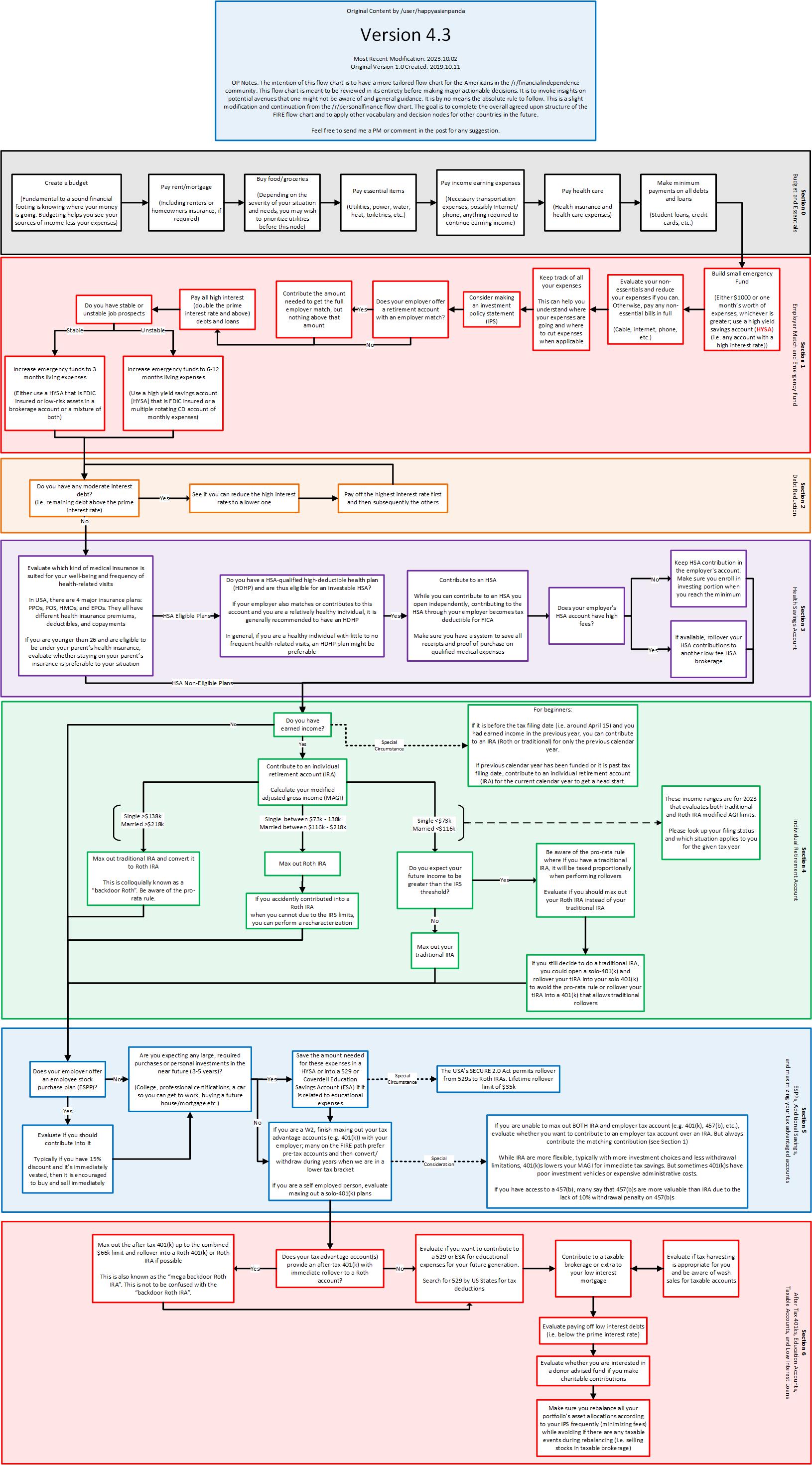
The long chart
Written for people further along. Same order. You can ignore most boxes until you have a paycheck.
Bonus
FIRE
Not this year’s project. The name of the long game once income exists.
Financial independence: a planned withdrawal from invested money covers what you spend. Work is optional.
- 4% lean
- Spend × 25. Classroom version.
- 3.5% mid
- Spend × about 29.
- 3% ours
- Spend × about 33. Family sheet and iOS Finances tab. Progress = investable ÷ this target.
- Fat / fatter
- Same math. Bigger yearly spend.
Investable is cash you do not need soon, IRAs, 401(k)s, brokerage, rental equity. Not a house, a car, or a 529. Savings rate is leftover after living, divided by take-home. That is the lever later. A clever ticker is not.
Family note for a student just starting. Caps, card APRs, and cash rates change. Confirm in the app before you buy. Not an offer to manage money, and not a recommendation of Robinhood, Vanguard, or any ticker.